 DUMBIO
May 31, 2026
The Big Lie We're All Telling Ourselves About "Time Management" in 2026
Time management isn't a willpower problem — it's a capacity problem. Here's how context switching quietly destroys your day, and the shift that finally fixed mine.
A few months ago, my workday looked like a war zone. I'd wake up, open a brand-new browser tab, look at my shiny list of 15 massive tasks, and tell myself, "Today is the day I crush it." By 6:00 PM, I had crossed off exactly two items. The rest? Lovingly dragged and dropped into tomorrow's list. I felt exhausted, deeply frustrated, and plagued by that constant, nagging guilt of "Where the hell did my day go?"
We live in 2026. We were promised that AI, hyper-automation, and smart tech would hand us back our free time. Instead, our attention span has been sliced and diced into micro-seconds. Between Slack pings, phone calls, and the temptation of just "checking one quick thing," our focus is under constant attack.
But here's the brutal truth I had to learn the hard way: The problem isn't your willpower. The problem is your To-Do list.
The Hidden Tax of "Just a Quick Call"
We like to think we're great at multitasking. We aren't. Science has known this for years, but in 2026, the stakes are higher. Every time you are in the zone, writing code or designing a project, and your phone rings, you pay a massive fee.
In tech, we call it context switching. When you stop Task A to handle a 2-minute phone call, it doesn't take 2 minutes to get back to work. It takes your brain roughly 15 to 20 minutes to regain that deep, focused flow. Do that four times a day, and you've just flushed over an hour of peak mental energy down the toilet.
To survive today, you don't need a longer list of things to do. You need a way to protect your focus. You need to anchor yourself to one single task at a time, blindly ignoring the noise until it's done.
But how do you do that when your daily list is screaming 10 different urgent things at you?
Shifting from Time to "Capacity"
The breakthrough for me happened when I stopped treating my workday like an infinite bucket. Time is fixed, but your capacity — your actual energy and realistic bandwidth — is highly fluid.
If you put three "massive" features and four "quick" meetings on today's list, you've already failed before you started. You haven't accounted for the weight of those tasks.
I started experimenting with a new methodology. Instead of just writing down what I needed to do, I started forcing myself to size my tasks realistically before my day even kicked off. I needed a framework that would look at my day and say: "Hey, buddy. You only have 5 hours of actual focus in you today. If you put this massive project on the list, you are at 100% capacity. Stop adding things."
When you plan around your true capacity, something magical happens. The anxiety fades. You stop chasing an impossible finish line and start focusing on the one thing that matters right now.
The Tool That Rewired My Brain
I spent years trying every app on the market — Notion templates, hyper-complex project managers, AI-generated schedules that tried to micromanage my calendar. None of them worked because they all let me lie to myself about how much I could get done.
Then I built a new habit around a beautifully minimal framework, and it completely changed my relationship with time.
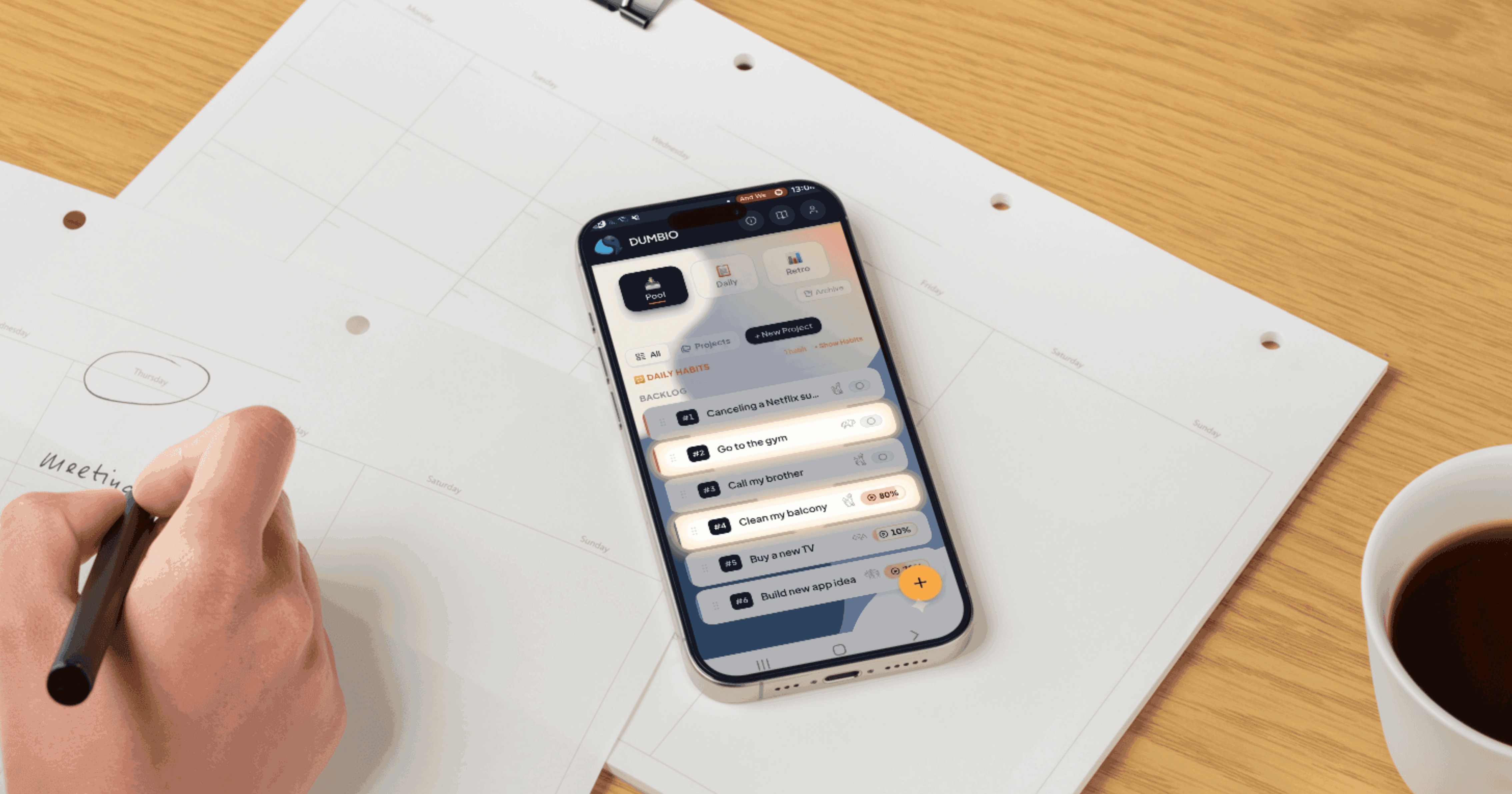
The app is called Dumbio.
What makes Dumbio different is that it's explicitly built as the next generation of the To-Do list. It doesn't try to be a fancy AI assistant that chats with you or complicates your life. Instead, it enforces a strict, capacity-driven methodology.
When you add a task, you use a simple scale to size it. Dumbio visually maps out your daily capacity, building a realistic, stress-free schedule. If you try to overcommit — which we all do — the app gently forces you to confront reality before the day turns into a stressful mess. It forces you to serialize your day, focusing on one single, sized milestone at a time, protecting you from those focus-shattering interruptions.
Final Thoughts
If you're tired of the endless cycle of dragging unfinished tasks from Tuesday to Wednesday to Thursday, stop blaming your focus. Change the system.
Give your brain a break, start measuring your actual capacity, and maybe give Dumbio a spin. It's the closest thing to buying back your peace of mind in 2026.